Commercial Acrylic Roof Coatings for Dallas–Fort Worth Buildings
Pepper Coatings restores commercial and industrial roofs across Dallas–Fort Worth. On the right roof, an acrylic coating system can protect an existing surface without an immediate tear-off. The decision starts with the roof’s condition, drainage, substrate, and the details around seams and penetrations—not a one-size-fits-all product pitch.
The Pepper Coatings Difference
Our acrylic work includes metal roofs on churches, restaurants, and large distribution facilities across North Texas. We inspect the existing roof before recommending a coating, document the needed repairs, and select the system for that particular substrate.
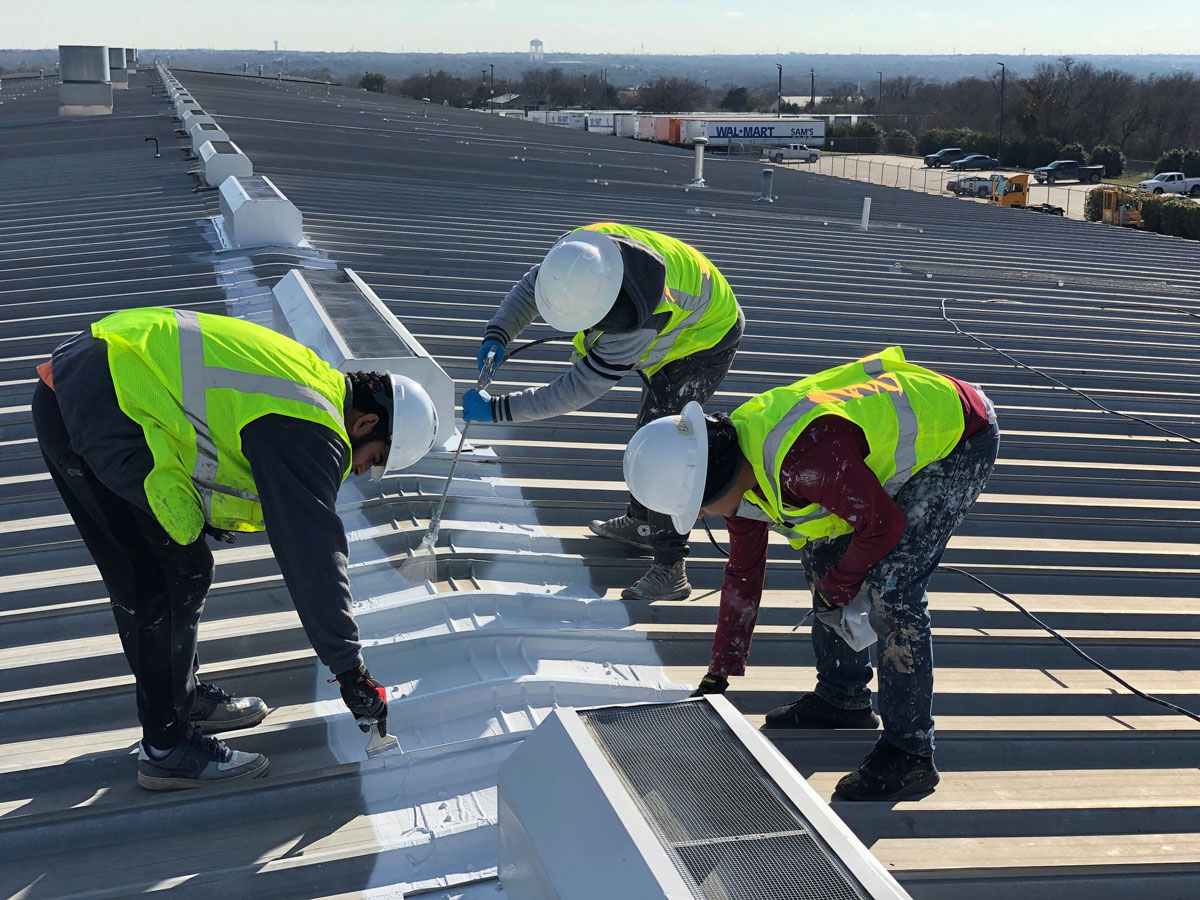
For metal roofs, we inspect fasteners, rust, horizontal and vertical seams, closures, flashings, and penetrations. The scope may call for cleaning, repairs, seam reinforcement or mastic, adhesion testing, and a compatible primer before the field coating. We spell out that preparation in the proposal.
Application method, number of passes, coverage rate, and target dry-film thickness depend on the chosen manufacturer’s system and the roof’s condition. We do not promise the same assembly for metal, asphaltic, or single-ply roofs; each needs a substrate-specific inspection and specification.
When an Acrylic System Makes Sense
Acrylic is a practical option for a structurally sound roof with positive drainage when inspection and adhesion testing support it. Metal panels and their seams are a common fit. Damaged roofing, trapped moisture, and areas that hold water must be addressed before a system can be specified.
Light-colored coatings may reduce roof-surface heat gain, but actual building energy savings depend on the coating, insulation, climate, and building operation. Color matters: several of our documented acrylic projects used custom dark-grey finishes for the property, so we do not quote a universal reflectivity or cooling-savings percentage.
Leaks are not fixed by spraying over them. On projects such as Sanger’s Church of Christ and 505 Houston Street in Coppell, seam and penetration treatment were part of the documented scope before the coating passes. That detail work is central to the result.
Where Acrylic Works — and Where We Recommend Against It
Acrylic systems need positive drainage. GAF’s current Premium Acrylic HydroStop Top Coat data sheet, for example, calls for a clean, dry roof with no trapped moisture, repair of damaged membranes and details, adhesion test patches, and positive drainage. It also limits a single top-coat application to 1.5 gallons per 100 sq ft; the complete system and target dry-film thickness depend on the approved specification. That is manufacturer guidance for that product, not a claim that every Pepper project used GAF. We also document cases where acrylic failed on roofs with standing water:
- Failed acrylic coating repair — 14024 Josey Ln., Dallas, TX
- Why acrylic fails on a flat roof — 4915 S. Cooper St., Arlington, TX
- Failing acrylic coating repair — AT&T, 208 Sentry Dr., Mansfield, TX
Acrylic Roof Coating Projects in North Texas
These are completed Pepper Coatings projects, not stock examples. Each project page has the full case study and additional photos.
Sanger: 35,000 sq ft R-panel metal roof
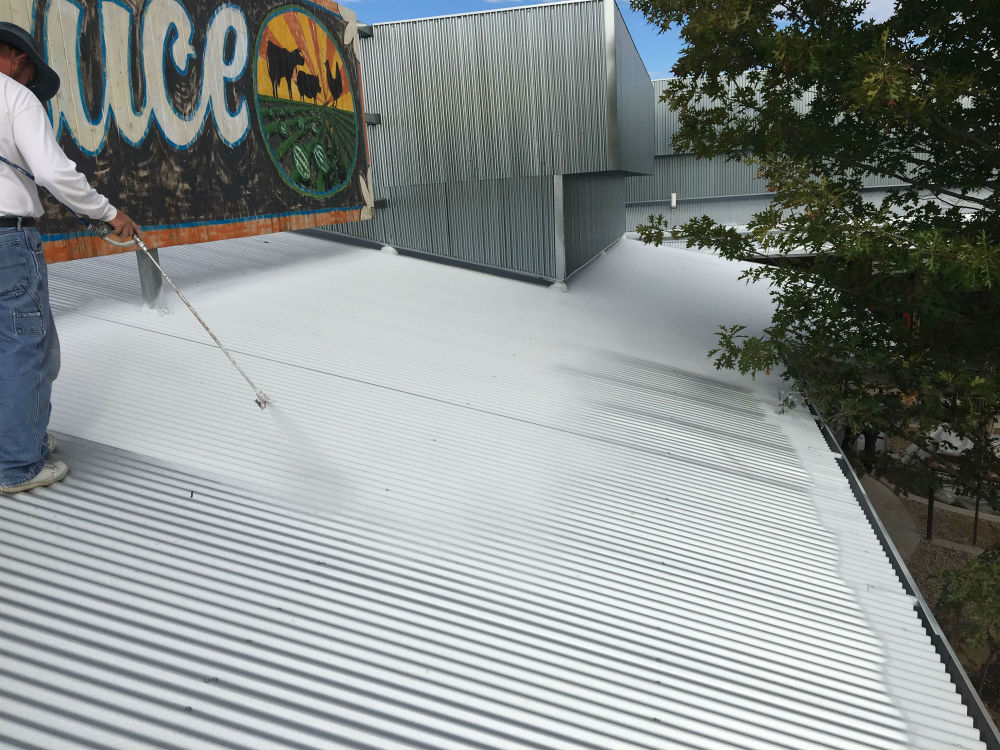
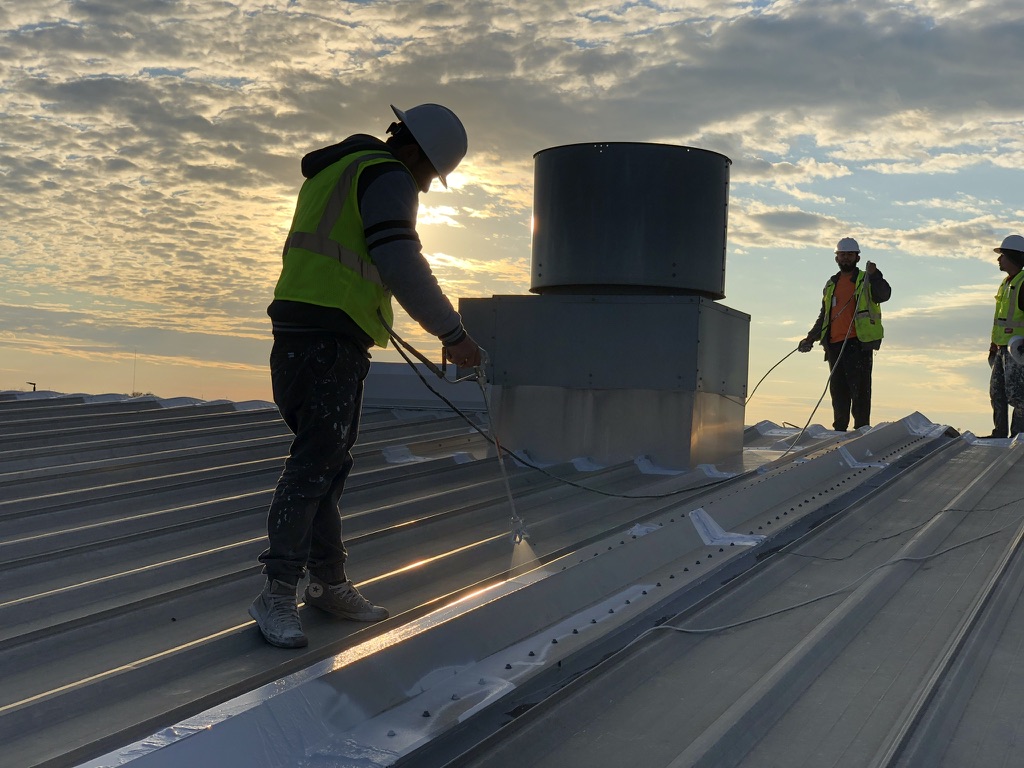
At the Church of Christ at Sanger, the team power-washed the existing roof, three-coursed horizontal seams and penetrations, then spray-applied two passes of custom dark-grey acrylic. Read the Sanger case study.
Coppell: corrugated metal roof and seam repairs
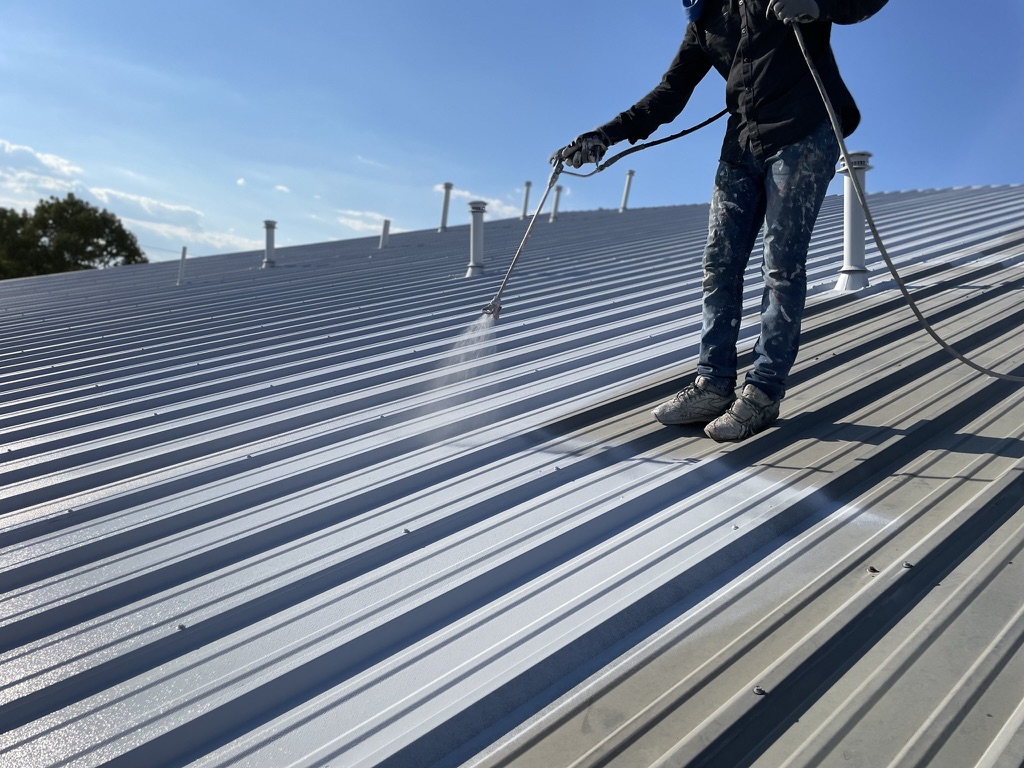
At 505 Houston Street, a newly constructed galvanized corrugated-metal roof was leaking. The documented scope included surface preparation, mastic at open vertical seams and closures, detail work at penetrations, and two passes of dark-grey Lapolla Thermo-Flex 1000 acrylic. Read the Coppell case study.
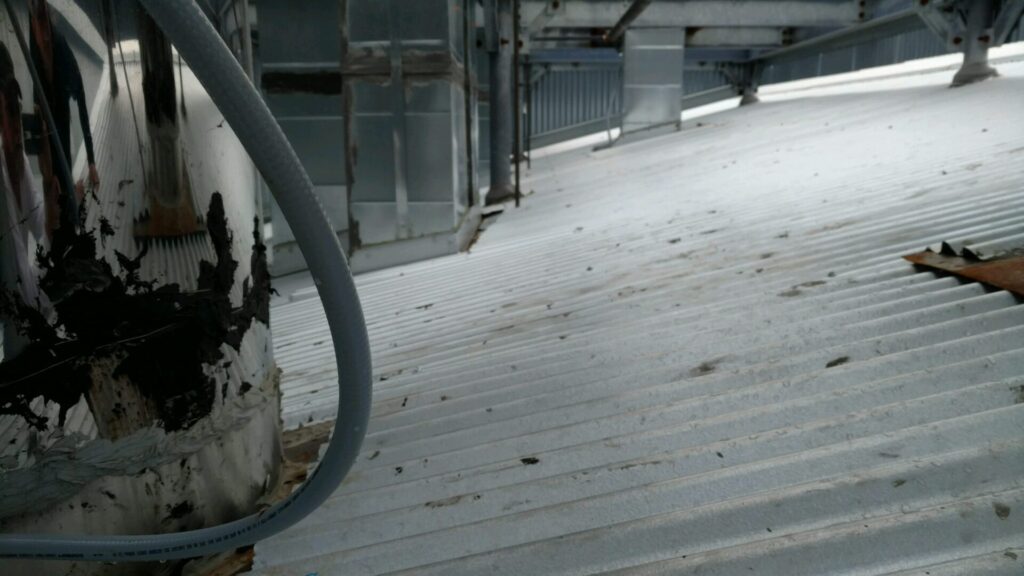
DeSoto: 100,000 sq ft distribution facility
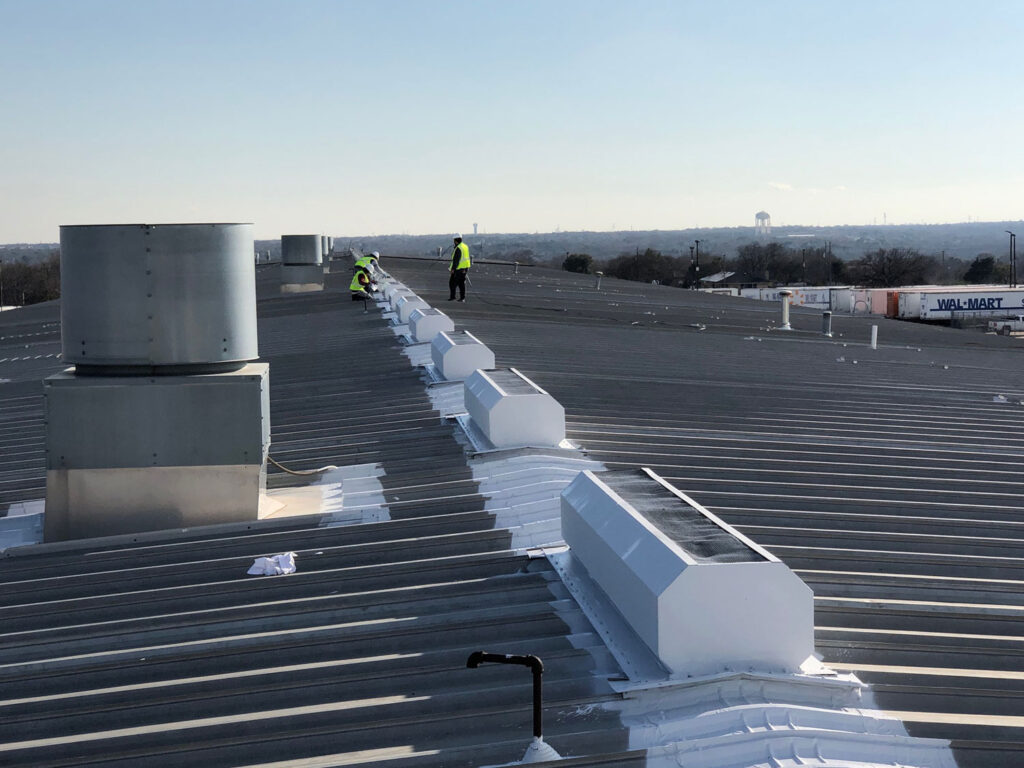
Pepper Coatings was contracted to apply an acrylic system over the aging galvanized standing-seam metal roof at Walmart’s DeSoto distribution facility after the team reported multiple leaks. Read the DeSoto case study.
What Determines the Scope and Price?
For initial budgeting, acrylic roof coating applications generally range from $3.00–$4.75 per sq ft. This is a ballpark, not a quote or guarantee. Final pricing depends on roof condition, access, drainage, cleaning and rust treatment, fastener and seam repairs, primer or adhesion requirements, coating coverage, and the specified system or warranty. An on-site inspection and written scope are required. Where water ponds or the underlying roof is unsound, we discuss other repair or restoration options.
For a different roof condition or service area, see our commercial silicone roof coating service or completed-project map.
Let’s Talk About Your Roof
Tell us about the roof’s location, size, material, drainage, and any known leaks. We’ll inspect the conditions, explain whether acrylic is appropriate, and provide a written scope for repairs and coating—or recommend another path when acrylic is not the right fit.
Request a commercial roof inspection to confirm whether acrylic is right for your roof and receive a project-specific estimate. The budgeting range above does not replace an inspection or written proposal.